
 Facebook Ads

























Currently, the catalogue printing service has become an essential promotional tool for businesses looking to introduce products and services professionally and impressively. With high demands for quality and speed, an affordable and quick catalogue printing service not only helps businesses effectively reach customers but also creates a profound impression from the very first glance. So, what are catalogue printing and the key considerations when designing one? Let’s find out in detail with WIFIM JSC through the following article!
What is a Catalogue and is it Important in Marketing?

A catalogue is an advertising document containing detailed information about a business’s products or services, such as descriptions, images, and prices. A catalogue is not just a means of transmitting information; it is also a tool to create a first impression with customers, helping them make purchasing decisions quickly and effectively.
A catalogue plays a crucial role in building and strengthening brand recognition, creating a professional and consistent image of the business. It is an effective marketing tool that helps introduce products and services to the correct target audience, thereby solidifying customer relationships and increasing the likelihood of closing sales.
Reasons to have a catalogue
So why is a catalogue an indispensable element in a business’s marketing strategy?
- Saves time and effort: A catalogue helps customers easily learn about products or services without requiring assistance from staff, saving time for both the customer and the business.
- Increases conversion rate: Providing complete product information helps customers easily make purchasing decisions, thereby increasing the conversion rate.
- Enhances brand recognition: A catalogue design that is unique and consistent with the brand identity kit will help the business create a strong impression and increase memorability in customers’ minds.
- Supports sales staff: A catalogue provides sales personnel with detailed materials for quick and accurate consultation and product information, enhancing work efficiency.
- Ensures consistent information: The catalogue is a tool that helps the business maintain consistency in information delivery, ensuring that all departments and partners have accurate and up-to-date information.
Catalogue Printing Price List at WIFIM JSC
Below is a reference price list for catalogue printing services at WIFIM JSC. With a commitment to high quality and professional printing processes, WIFIM JSC delivers impressive catalogue products, helping businesses create a unique mark and attract customer attention. For more details and tailored consultation, please contact us directly.
Catalogue Printing Price List
| SPECIFICATION | 4-COLOR OFFSET PRINTING, C150, STAPLE BINDING | ||
| A4 SIZE | 200 COPIES | 500 COPIES | 1,000 COPIES |
| 8 Pages | 20,000 VND/copy | 10,000 VND/copy | 7,000 VND/copy |
| 12 Pages | 28,000 VND/copy | 14,000 VND/copy | 7,000 VND/copy |
| 16 Pages | 32,000 VND/copy | 18,000 VND/copy | 10,000 VND/copy |
| 20 Pages | 38,000 VND/copy | 20,000 VND/copy | 12,000 VND/copy |
| 24 Pages | 42,000 VND/copy | 19,000 VND/copy | 14,000 VND/copy |
| 28 Pages | 50,000 VND/copy | 25,000 VND/copy | 16,000 VND/copy |
| 32 Pages | 52,000 VND/copy | 28,000 VND/copy | 18,000 VND/copy |
Catalogue printing price list at WIFIM JSC
Popular Catalogue Types in the Market Today
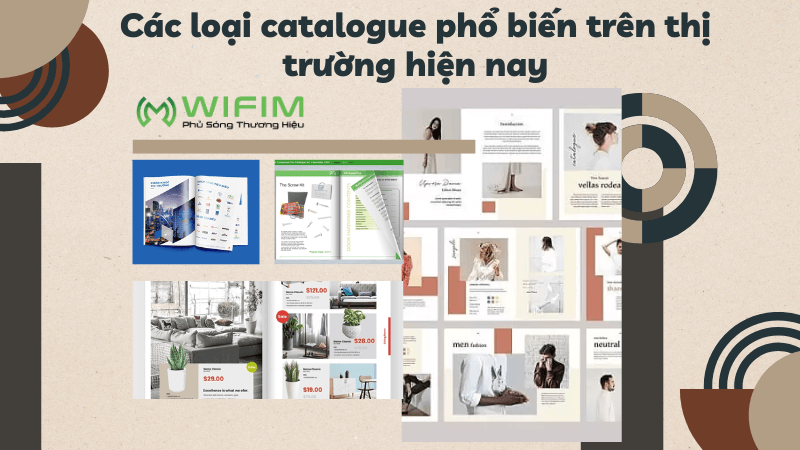
A catalogue is an effective tool that helps businesses convey information about products and services vividly and visually to customers. Choosing the right type of catalogue not only helps increase brand recognition but also enhances the customer’s shopping experience.
Catalogue for Introducing Business Products
Product catalogues are the most traditional and popular type, focusing on detailing specific products. Each page in this catalogue typically features sharp images along with detailed descriptions such as size, color, material, and prominent features of the product.
For example, a home appliance business would have a product catalogue detailing each type of pot and pan with unique features like non-stick or scratch-resistant properties, helping customers easily compare and choose the most suitable product.
Catalogue Introducing Available Business Services
Unlike product catalogues, service catalogues focus on the services a business provides. This helps customers understand the service options and the value they bring.
If you operate in the spa industry, your service catalogue might detail each package for massage or skin care services along with the benefits each service provides, helping customers easily decide which service suits their needs.
Fashion Catalogue
Fashion catalogues often focus on eye-catching images, keeping up with the latest trends to attract customers. Each page in this catalogue not only introduces products but also establishes the brand’s style, helping customers feel the fashion trends the business aims to convey.
For example, a spring/summer fashion brand catalogue might showcase collections of trendy clothes and accessories, coordinated with a youthful, dynamic setting to increase appeal to customers.
Furniture Catalogue
Furniture catalogues provide a clear visualization of how products will harmonize within a living space. Every product in this catalogue is presented in context, helping customers easily imagine the combination in a real room.
E-catalogue
E-catalogue is a prominent new trend in the digital age, bringing interactive and convenient experiences to users. Unlike traditional catalogues, e-catalogues can be viewed on electronic devices and easily shared via email and social media.
For example, an e-catalogue of an electronics store might include smartphone products, allowing customers to click to view product details or place an order directly.
Choosing the right type of catalogue helps businesses convey information effectively, while enhancing customer experience and boosting sales. Each type of catalogue is suitable for different industries and objectives, helping businesses express their professionalism and distinct class.
Popular Catalogue Formats for Businesses
A catalogue is not just a tool for introducing products but also plays a vital role in a business’s marketing strategy. Depending on the goals and usage needs, different catalogue formats can be chosen to increase communication effectiveness and customer interaction. Below are two popular catalogue formats that businesses should consider:
Print Catalogue
A print catalogue is a physical document designed and printed, allowing customers to easily hold and look up information anytime, anywhere. This is a traditional method but remains highly effective in creating a strong impression, especially at events, conferences, or when introducing products in stores. A print catalogue also helps the business present the brand image vividly and accessibly, thereby creating opportunities for customers to experience the product more visually.
Online Catalogue
An online catalogue (or electronic catalogue) is the digital version of the print catalogue. It can be released as a PDF, website, or video, allowing customers to easily access it from anywhere and on any device. With the convenience and flexibility of an online catalogue, businesses can quickly update content and add product information. Most notably, there’s the ability to optimize user experience through interactive online features. This is an ideal choice for businesses that want to expand their reach, especially in today’s context of strong digitalization.
Essential Elements in a Catalogue
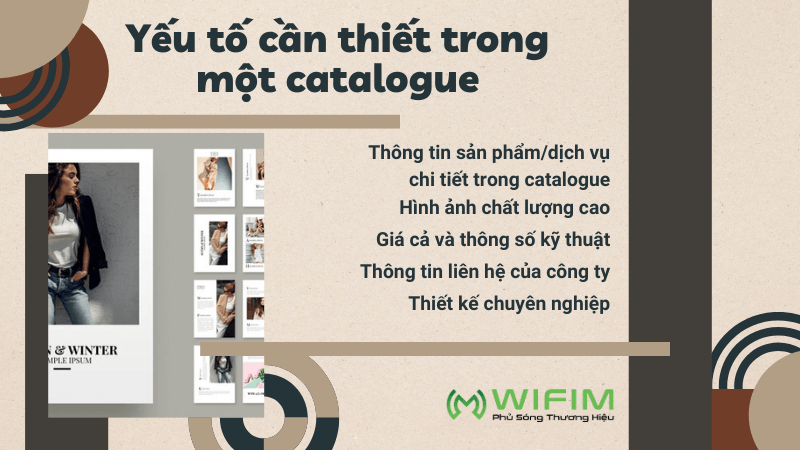
A professional catalogue is not just a tool for promoting products or services but also a bridge between the business and the customer. Below are the indispensable elements for creating a complete and appealing catalogue.
Detailed Product/Service Information in the Catalogue
Providing clear and detailed descriptions of each product or service helps customers correctly understand the features and value. This increases trust and supports customers in making quick decisions.
High-Quality Images
Sharp and professional images highlight the product and attract the viewer’s attention. A catalogue with beautiful images will easily create an impression and encourage customers to learn more.
Pricing and Technical Specifications
Transparent pricing and technical specifications help customers easily compare options. This helps customers quickly find the product that suits their needs.
Company Contact Information
Providing clear contact information such as phone number, email, and website helps customers easily connect with the business. This is a way to build trust and support customers when they need more information.
Professional Design
Designing the catalogue with a harmonious layout and eye-catching colors makes the information easy to read and engaging. A professionally designed catalogue will demonstrate brand class and create a good impression with customers.
Certifications (if any)
Quality certifications, international standards, or awards that the product or service has achieved will increase credibility and trust from customers. Including information about these certifications in the catalogue not only affirms product quality but also helps customers feel more secure when making a purchase decision.
Return Policy
Information about the product return policy is an important factor that helps customers feel secure when buying. A clear and easily understandable return policy demonstrates the transparency of the business, thereby helping to increase customer trust and their likelihood of making a purchase.
Popular Catalogue Printing Techniques Today
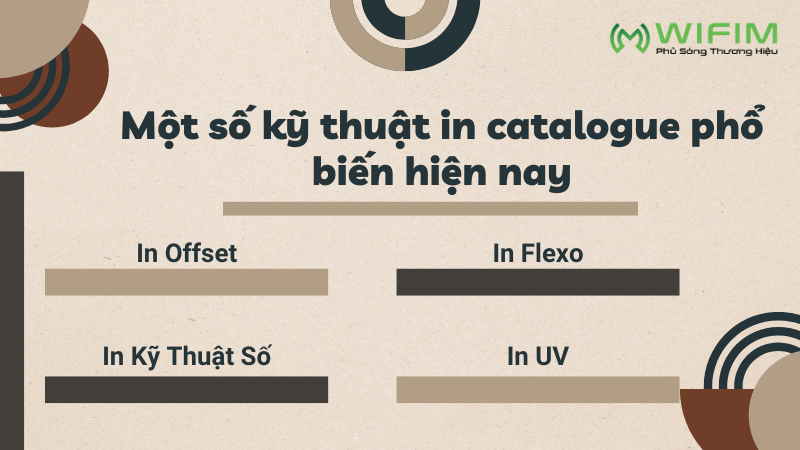
Offset Printing
Offset printing is a popular and efficient printing technique, especially suitable for large-volume catalogue orders. This method uses a printing plate and ink transferred via a buffer layer (offset blanket) before printing onto the paper, helping to create sharp images and accurate colors.
Digital Printing
Digital printing is a flexible option for small-volume orders, saving time and costs. This method does not require printing plates like offset printing; instead, it relies on digital data to print directly, allowing it to handle urgent or small-quantity printing orders. Digital printing also supports the personalization of each copy, helping businesses create customizable catalogues that suit specific customer needs.
Flexo Printing
Flexo printing is a relief printing technique, often applied to packaging materials such as plastic, glossy paper, or non-waterproof papers. This method is particularly effective when large quantities need to be printed on flexible materials, ensuring high durability. Flexo printing is suitable for catalogues or product packaging that require durability, such as industrial catalogues or products used in environments that demand abrasion resistance.
UV Printing
UV printing is a special printing technique that uses UV ink, which increases the durability of the print and creates a prominent color effect. After printing, the UV ink is immediately dried by UV light, resulting in images with higher gloss and clarity. This technique is suitable for premium catalogues or outdoor catalogues that need to be resistant to water and sunlight, helping the product maintain quality for a long time even in harsh environmental conditions.
Each printing technique has its own advantages, suitable for different types of catalogues and requirements. Choosing the right printing technique not only helps optimize costs but also enhances the quality and aesthetic value of the catalogue, helping the business make a good impression on customers and stand out in the market.
Important Considerations When Printing a Catalogue
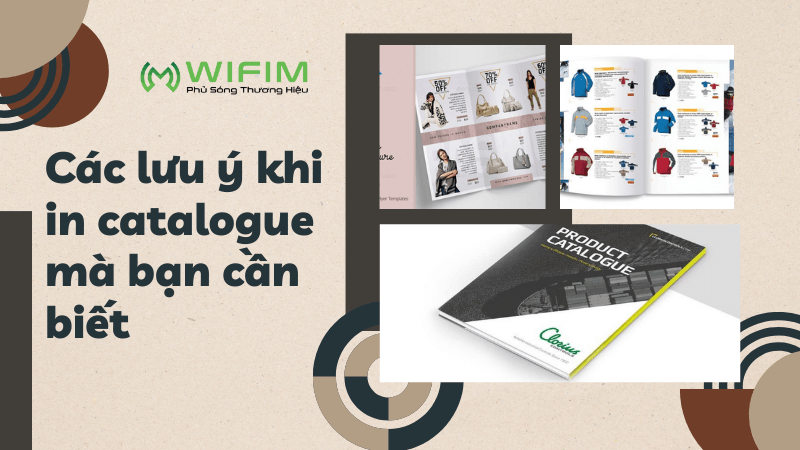
- Choose suitable paper: Selecting high-quality, thick paper is an important factor that makes the catalogue durable and professional. Papers like Couche or Art Paper provide a premium feel, creating a luxurious impression and are suitable for catalogue products.
- Proof before printing: Color significantly affects the quality of the catalogue, so the color on the sample proof needs to be carefully checked to ensure accuracy.
- Images must have high resolution: Images in the catalogue need a high resolution, at least 300 DPI, to ensure sharpness during printing. Quality images help attract customers and demonstrate the business’s professionalism.
- Optimize layout and design: The catalogue should have a harmonious, easy-to-view, and uncluttered layout so customers can easily absorb the information. A reasonable and consistent design will create a professional feel and enhance the customer’s experience when viewing the catalogue.
Modern Catalogue Printing Trends
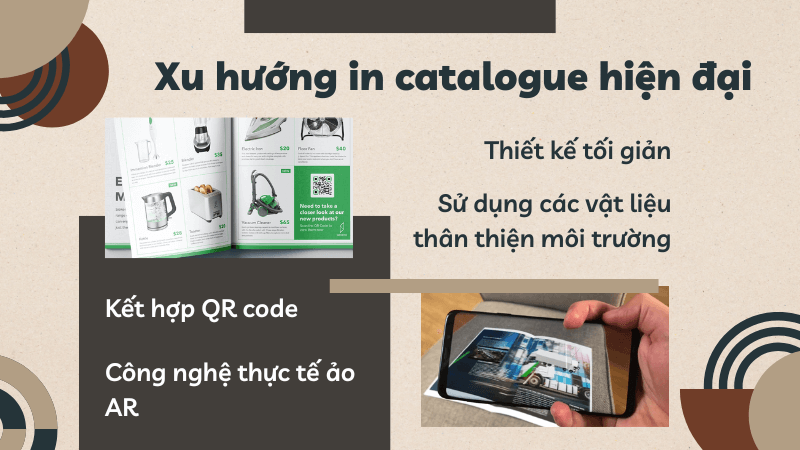
Integrating QR Codes
Using QR codes in the catalogue helps customers easily connect to supplementary online information such as videos or websites. This offers a faster, multi-channel, convenient experience and increases interaction.
Augmented Reality (AR) Technology
Integrating AR into the catalogue allows customers to interact directly with the product, helping them visualize and experience the product in a real-world space. This is a modern trend that enhances user experience and creates a deep impression.
Minimalist Design
Focusing on simplicity and clarity, removing complex details so customers can easily access the main content. This design brings sophistication, modernity, and helps viewers quickly grasp information.
Using Environmentally Friendly Materials
Choosing recyclable paper and ink is a common trend to protect the environment and enhance the business’s green image. Friendly materials help the business demonstrate social responsibility, creating a favorable impression with customers.
See more: Media Service at WIFIM JSC
The Importance of Using a Quality Catalogue
- First impression: A beautifully designed catalogue not only helps the product stand out but also creates a strong impression with customers, thereby enhancing brand value.
- Convenience: A paper catalogue is easy to carry and can be looked up anytime, convenient for customers in all situations.
- Easy distribution: Catalogues can be distributed through direct sales channels or at events, helping to increase customer reach.
- Ability to integrate with marketing strategy: Using the catalogue as part of the overall marketing strategy helps increase recognition and boost sales.
Who Needs to Use a Catalogue?
- Sales and business staff: Supports providing product/service information quickly and accurately to customers.
- Buyers and decision-makers: A catalogue helps them easily compare products/services from various suppliers before making a decision.
- Store and warehouse managers: Helps track information about inventory, soon-to-expire products, and items needing replenishment.
- Marketing staff: Assists in introducing products at presentations, exhibitions, or events.
- External partners (agents, distributors): Used as reference material to convey product/service information to their customers.
Conclusion
Through the shares above, it can be seen that catalogue printing is an indispensable part of a business’s marketing strategy. A catalogue is not merely a document introducing products; it is also a tool for conveying the brand image professionally, creating a strong impression with customers.