
 Facebook Ads













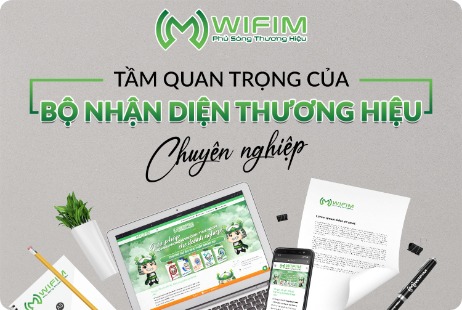










A name card is a tool for creating an impression on partners and customers, helping to enhance the professional image of an individual or business. To obtain high-quality business cards, you must not only focus on the design but also select the right material, printing technique, and a reputable unit that can provide the best service at a reasonable price. Join WIFIM JSC to learn more deeply about the criteria for selecting suitable name cards and the necessary factors for achieving the most professional business card product through the following article!
Name Card Printing Price Quote at WIFIM JSC
Name Card Printing Price List
| QUANTITY | UNIT | UNIT PRICE (VND) | TOTAL (VND) |
| 5 | Box | 30,000 VND/box | 150,000 VND |
| 10 | Box | 25,000 VND/box | 250,000 VND |
| 20 | Box | 22,000 VND/box | 440,000 VND |
| 100 | Box | 18,000 VND/box | 1,800,000 VND |
Besides the name card printing service, we also offer a service for custom name card design and business card design.
What is a Name Card and Is It Important?
A name card (business card) is typically a small rectangular piece of paper that briefly presents the basic information of an individual or business. The name card usually includes the logo, brand name, address, phone number, and contact email, helping partners easily get in touch later. The design of the name card should be clear and professional, contributing to building a good impression on the recipient.
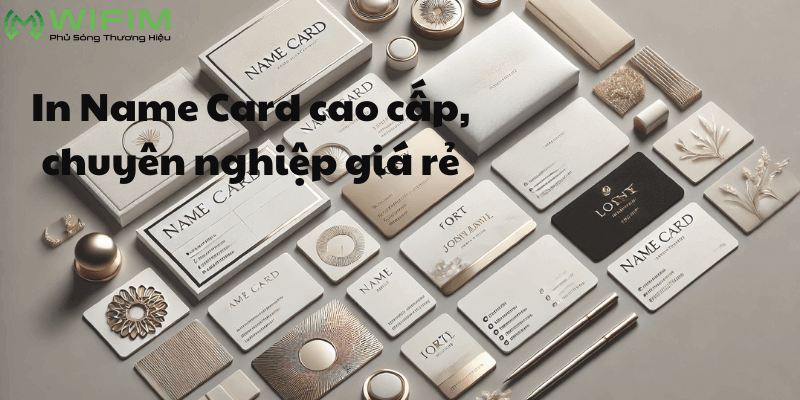
The name card is often designed to be synchronized with the brand identity kit, colors, and characteristic style of the business, creating visual consistency for the brand image. Companies often have separate name cards for employees to provide contact information to customers and partners. The design and information on the name card can be flexible, adjusted slightly between positions within the organization to suit each role.
Common Name Card Printing Materials Used Today
The name card printing material significantly influences the appearance and feel experienced by the recipient. Choosing the right material not only enhances aesthetic value but also expresses the user’s style and personality.
Popular Paper Types for Name Card Printing
Standard Paper (Ivory, Fort, Couche Paper)
Ivory Paper: Ivory paper has a smooth, high-thickness, and sturdy surface. With a white or cream color, this type of paper is often used to print good quality name cards, providing a professional and luxurious feel.
Fort Paper: Fort paper has a thickness similar to Ivory paper but is less glossy. This type of paper is commonly used for name cards that require high durability at a reasonable cost.
Couche Paper: Couche paper has a glossy or matte coated surface and good color reproduction capability. This is a suitable choice for name cards with many colors and vivid images, helping to attract attention from the recipient.
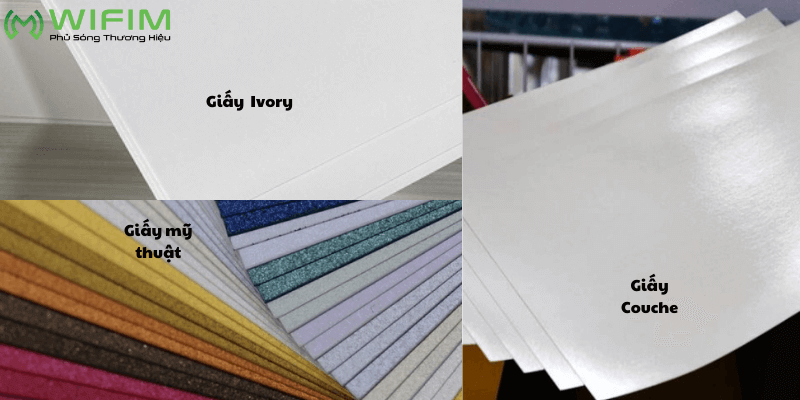
Art Paper (Fine Art Paper)
Art paper often has a special surface and diverse textures, such as rough or textured paper. The outstanding feature of art paper is its uniqueness and rich color palette. This type of paper is highly suitable for name cards that need to create a strong impression, often used in the fields of art, design, and high-end events.
Special Materials
Some Name Cards can be made from various materials such as plastic or metal. Plastic name cards are highly durable, waterproof, and tear-resistant. Unlike plastic name cards, metal name cards create a strong impression, often used for high-end businesses such as in finance or real estate.
Common Name Card Printing Techniques Used Today
Modern printing techniques help create high-quality products that attract customer attention. Below are the most popular name card printing methods today.
Offset Name Card Printing
Offset printing is one of the most popular traditional printing techniques, widely used in the printing industry. This method uses a printing plate to transfer ink onto the paper, allowing details and colors to be reproduced sharply and authentically. In particular, offset printing is very suitable for large orders, helping to save production costs and ensure stable quality for every product.
Digital Name Card Printing
Digital printing has become a popular choice in the current digital era, allowing printing directly from design files without the need for a printing plate. This method offers high flexibility, especially in adjusting designs and quick printing for small or on-demand orders. With the ability to print in various sizes and styles, digital printing helps meet the growing demands of the market.
UV Name Card Printing
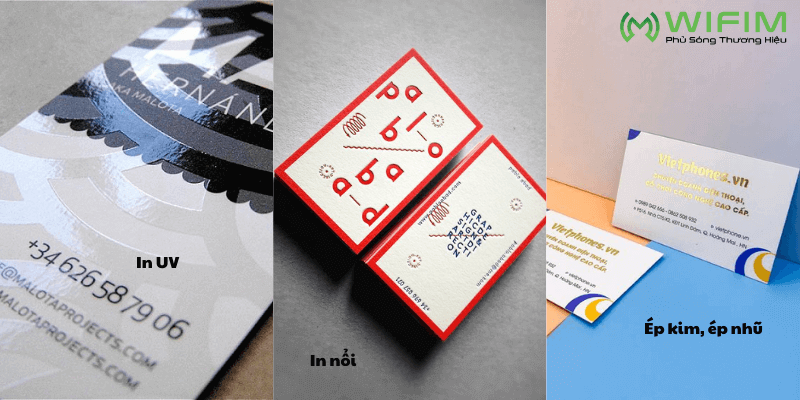
UV printing is a modern technique that uses UV ink combined with UV lamps to instantly dry the ink after printing, providing a glossy finish and vibrant colors to the name card. This method allows printing on many different types of materials and helps increase creative possibilities in design. With scratch resistance and color fastness, UV printed name cards are an ideal choice for businesses wanting to express a modern and professional style.
Embossing for Name Cards
The embossing technique creates raised patterns or text on the name card surface, providing a unique 3D feel. This method not only enhances aesthetic value but also creates a strong impression on the recipient, helping the name card stand out in the crowd. However, the complex execution process and high cost can be a barrier for some businesses.
Foil Stamping (Hot Stamping) in Name Card Printing
Foil stamping and metallic foil stamping are techniques that use heat to adhere a layer of metal or foil onto the name card surface, creating a luxurious and eye-catching effect. This method emphasizes important details such as the logo or contact information, making the name card more attractive and memorable. Although the cost and production time may be higher than other techniques, the aesthetic value it provides is often worth the investment.
Lamination (Gloss/Matte) for Name Cards
Lamination is a process of applying a protective film layer to the name card, helping to increase durability and scratch resistance. Depending on the type of film used, lamination can create a glossy or matte effect, bringing a unique look to the product. Besides protecting the name card from environmental factors, lamination also helps highlight the design, making it easier for the recipient to notice important information.
Name Card Classification by Level
The two most common types of name cards are budget name cards and premium name cards, each with its own characteristics.
Budget Name Cards
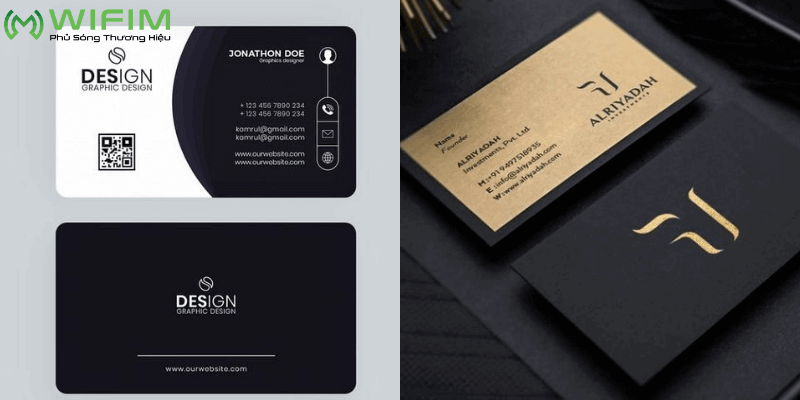
Budget name cards are usually printed on standard paper types such as Fort or Couche paper, with simple print quality and less complex designs. The main feature of this type of name card is cost-effectiveness, allowing users to print in large quantities without spending too much. These name cards usually do not have many special effects such as foil stamping or lamination.
Budget name cards are often suitable for startups, students, or small businesses with limited budgets.
Premium Name Cards
Premium name cards stand out with art paper, textured paper, or special materials like plastic or metal. This material not only creates a luxurious feel but also offers high durability and good scratch resistance. Premium name cards are often meticulously designed with effects like embossing, foil stamping, or lamination, creating a strong impression on the recipient.
Premium name cards are typically printed using modern techniques such as UV printing or high-quality offset printing, ensuring sharp colors and details. These name cards are not merely an introductory tool but also a part of the strategy for building a personal or business brand.
WIFIM JSC’s Professional Name Card Printing Process
Step 1: Check the name card design file
First, thoroughly check the design file to ensure sharpness, resolution, color, and parameters are suitable for printing standards.
Step 2: Select material and name card printing technique
Depending on the needs, choose paper types such as textured paper, glossy paper, art paper, and suitable printing techniques. The material and printing technology will directly affect the durability, hand-feel, and impression of the name card.
Step 3: Print a sample name card
Proceed to print a few samples to check the accuracy of colors, lines, and printed details.
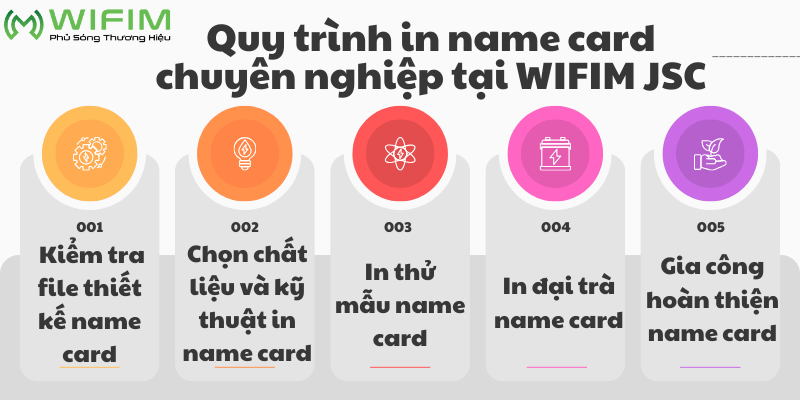
Step 4: Mass name card printing
After the sample print is approved, proceed with mass printing according to the required quantity. Ensure every batch is checked to avoid errors during large-scale production.
Step 5: Finishing and post-press processing of the name card
Carry out finishing processes such as gloss/matte lamination, corner rounding, embossing, or UV coating if applicable. This step helps the name card become professional, durable, and creates a special impression when handed to customers.
Criteria for Choosing a Reputable Name Card Printing Unit You Need to Know
To ensure the product meets high standards and accurately reflects the brand’s style, choosing a reputable name card printing unit is an extremely important factor. Below are the criteria you need to consider when seeking a printing partner.
Printing Quality: Choose a reputable name card printing unit that is committed to high-quality products, from accurate colors and sharp images to every small detail.
Dedicated Consultation: Choose a unit with a professional consulting team to better understand materials and technology, helping the name card stand out and suit the brand style.
Diverse Services: A professional unit offers many options for materials and modern printing techniques such as embossing, lamination, foil stamping, creating a unique style.
Fast Turnaround Time: Ensure quick progress while maintaining quality, meeting urgent needs effectively.
Reasonable Price, Good After-Sales Policy: Competitive and transparent pricing, along with warranty and after-sales policies for existing customers.
Conclusion
Through the shares above, we hope you have gained a clearer view of the importance of name cards and the factors to consider when choosing a name card printing service. A professionally designed and printed name card is not only a tool for providing contact information but also expresses your brand’s style and value. Investing in a reputable printing unit with high-quality service will help you own impressive business cards, creating a deep impression on customers and partners in every communication opportunity.